Introduction
In 2025, enterprise risk is defined by relentless cyber threats. Ransomware, APTs, and supply chain attacks continue to evolve, pushing organizations to rethink their cybersecurity incident response strategies. The attack surface has expanded into cloud platforms, remote workforce, and third-party integrations, making response speed as critical as prevention.
For CISOs and IT security leaders, the question isn’t whether an incident will occur but how effectively the organization can detect, contain, and recover. Every hour of downtime can cost upward of $250,000, while customer trust depends on transparency and response quality. Yet most incident response teams still spend hours manually triaging alerts instead of containing threats. The real challenge is not detection, but speed and coordination. Without the right incident response tools, security teams lose valuable time in manual triage, increasing business impact and recovery costs.
The difference between chaos and control often comes down to the right incident response tools – integrated, automated, and built on proven frameworks. This is where modern incident response management comes in. The right combination of tools and processes transforms reactive firefighting into structured, efficient incident response in cybersecurity.
Building a Strong Foundation for Incident Response in Cybersecurity
Before selecting tools, enterprises need a structured foundation. Incident response frameworks such as NIST and SANS provide consistency, reduce decision fatigue, and define the incident response steps needed to contain a breach.
NIST Framework:
- Preparation – Plans, playbooks, and team training.
- Detection & Analysis – Monitoring, alerting, and prioritization.
- Containment, Eradication, Recovery – Limiting impact, removing threats, and restoring operations.
- Post-Incident Activity – Lessons learned and resilience improvements.
SANS Framework: Expands further with detailed identification and lessons-learned phases, making it particularly valuable in compliance-heavy industries.
These frameworks anchor the incident response process, ensuring technology investments fit within structured, repeatable workflows.

Core Incident Response Tools Powering Modern Security Teams
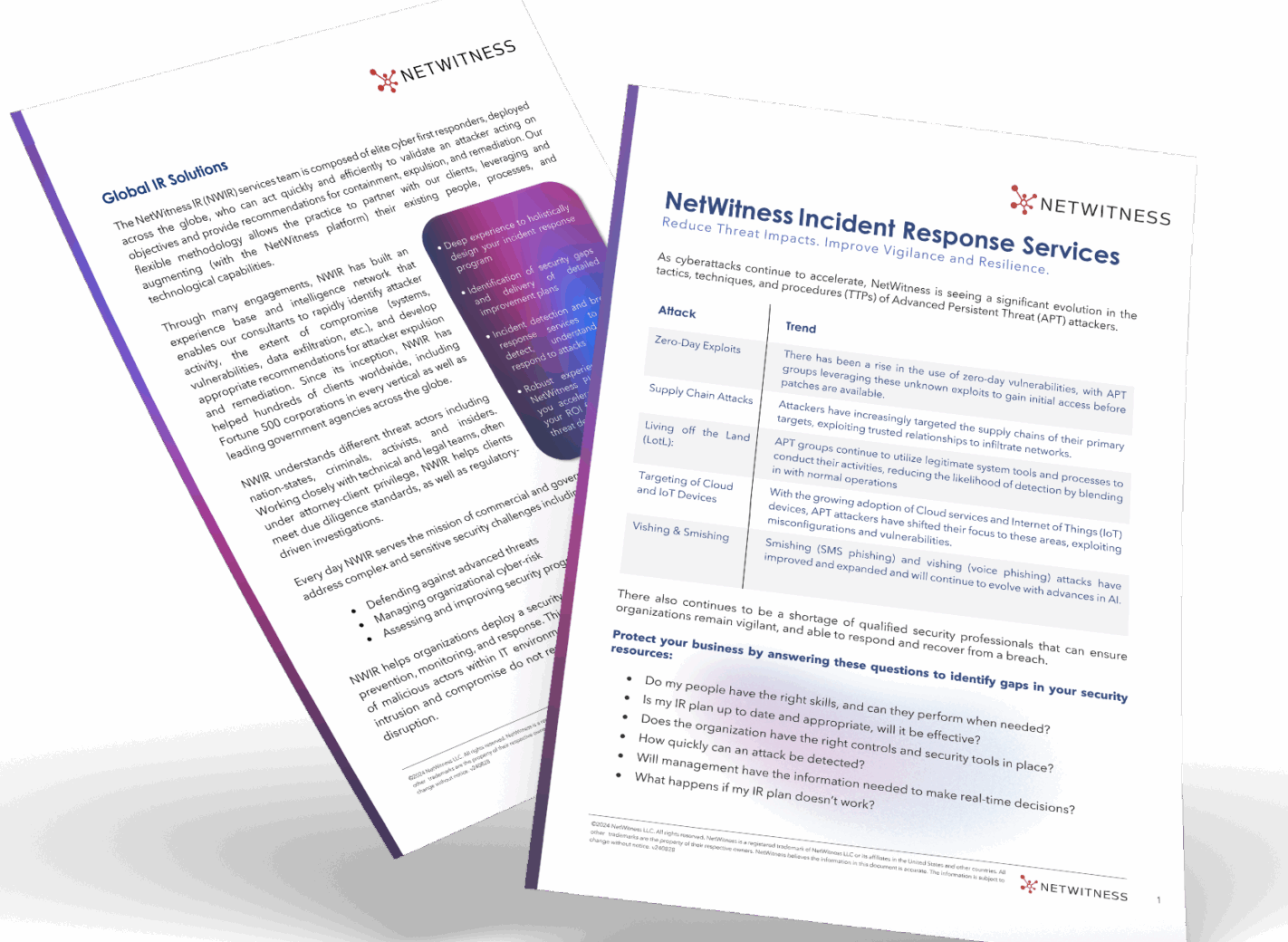
1. Security Information and Event Management (SIEM)
A SIEM in cybersecurity centralizes log data from endpoints, networks, applications, and cloud systems.
Advanced SIEMs use analytics and machine learning to detect anomalies, helping analysts prioritize threats.
- Enterprise Need: Hybrid-cloud compatibility, customizable dashboards, and integration with orchestration platforms.
- Value: Reduces alert fatigue by correlating and enriching events into actionable insights.
2. Security Orchestration, Automation, and Response (SOAR)
SOAR tools automate repetitive steps and orchestrate responses across systems. When integrated with SIEM, they execute playbooks that contain threats in minutes.
- Example: A phishing outbreak triggers automated workstation isolation, credential resets, and malicious domain blocks without analyst intervention.
- Advanced Capability: Dynamic playbooks that evolve with intelligence feeds.
3. Endpoint Detection and Response (EDR)
Endpoint Detection and Response provides continuous endpoint monitoring, flagging malicious processes and enabling quick isolation. With remote workforces expanding the attack surface, EDR has become essential.
- Key Features: Continuous real-time monitoring, advanced threat detection, automated response, and forensic investigation capabilities to protect endpoints against sophisticated cyberattacks.
- CISO Priority: Allows for assumed breach posture, enterprise reach, helps with encrypted traffic.
4. Network Traffic Analysis for Deep Incident Response Visibility
Network visibility is critical once attackers are inside. Packet capture tools help reconstruct attack chains, track lateral movement, and assess data exfiltration.
- Use Case: Better understand attacker behaviors even when they are subverting other tools and defenses or using LotL techniques.
- Enterprise Value: Forensic-grade evidence that satisfies regulators and supports legal action.
5. Incident Management Tools for Coordinated Response
Technology alone will not contain an incident; teams need coordinated communication. Incident management platforms provide standardized workflows, audit trails, and real-time updates.
- Impact: Executives stay informed, legal teams access compliance documentation, and responders focus on remediation rather than reporting.
- Outcome: Aligned decision-making across departments and geographies.
6. Threat Intelligence Platforms for Proactive Incident Response
Real-time threat intelligence enriches investigations by providing context on indicators of compromise (IOCs) and attacker tactics.
- Benefit: Turns reactive response into proactive defense by identifying threats before they escalate.
- Result: Faster triage, reduced false positives, and smarter prioritization.
How NetWitness Enhances Incident Response Services and Security
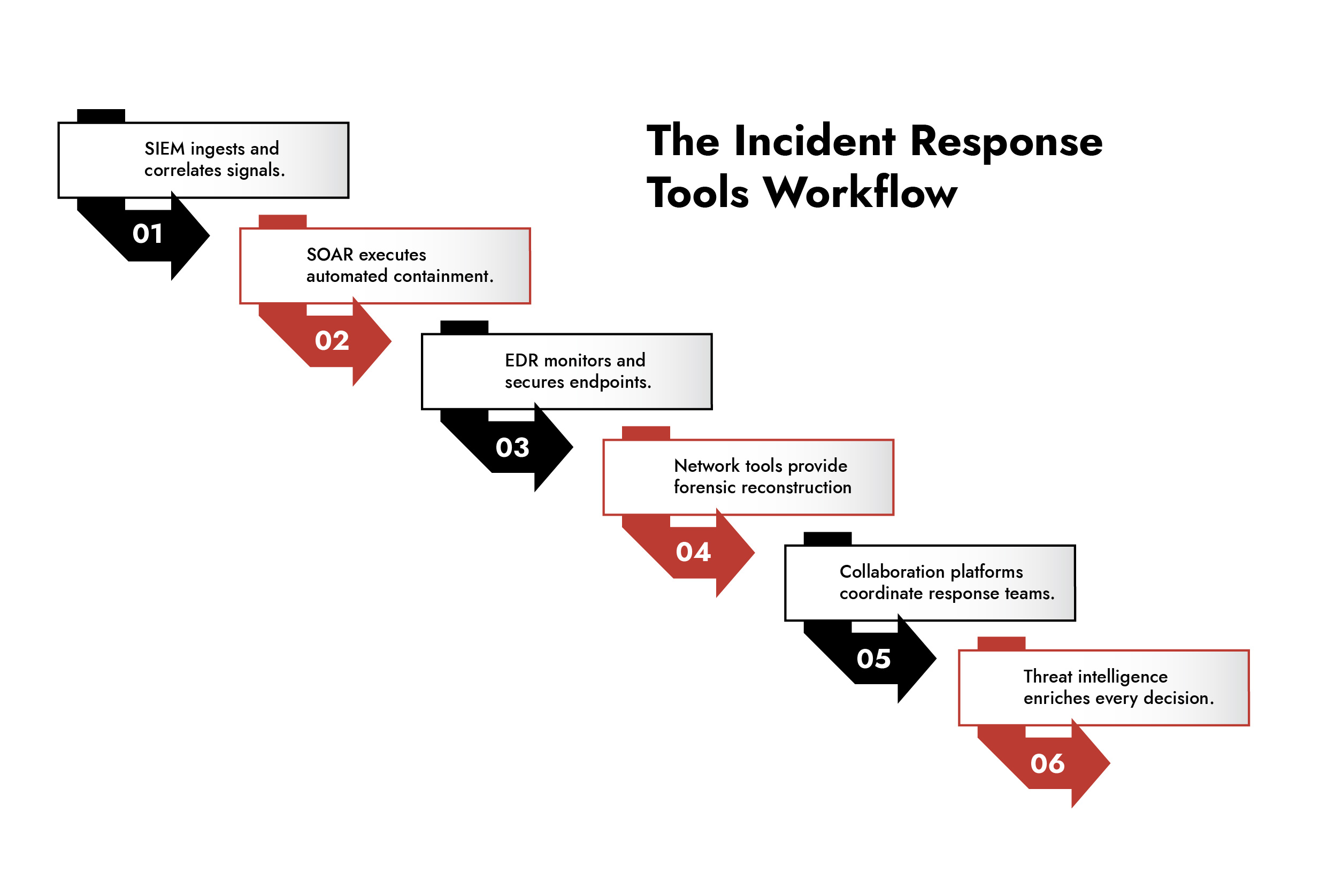
NetWitness Incident Response does not just plug into your stack; it empowers your incident response team at every critical stage with enterprise-grade capabilities:
- Unmatched Visibility: NetWitness captures comprehensive endpoint and network activity, providing the deep visibility needed for precise cyber threat hunting and rapid incident response across hybrid environments.
- Unified Analytics Platform: All critical incident response data – across SIEM functionality, packet capture, endpoint telemetry, and threat intelligence – are accessible through a single console, streamlining analysis and accelerating containment decisions.
- Expert-Led Response: NetWitness combines advanced technology with seasoned incident response professionals who deploy within hours, delivering in-depth forensics, remediation guidance, and continuous improvement recommendations aligned with established incident response frameworks.
- Seamless Integration: The platform integrates with existing security tools and workflows, enhancing rather than replacing current investments while providing the advanced analytics needed for sophisticated threat detection.
NetWitness augments your incident response process at every phase, bridging capability gaps and accelerating response times, ensuring your organization is always prepared for evolving threats.
Conclusion: Incident Response as Competitive Advantage
Modern incident response services go beyond tools. They combine technology, intelligence, and expertise to deliver faster, more effective outcomes.
NetWitness strengthens incident response cyber security by unifying visibility, analytics, and expert-led response into a single platform. This approach ensures organizations can detect, contain, and recover from threats with speed and precision.
For organizations evaluating the best incident management tools, the focus should be on integration, automation, and expert support. Because in today’s threat landscape, effective incident response security is not optional, it is business-critical.